The Chronicle of Freiburg
From the Celtic oppidum to the age of Vauban, a town grows by itself while you fortify it. A siege comes every 10, 25 or 50 years. Lose, and most of your works are razed and buried under a new layer of earth.
A chronicle of sieges, from the Celts to Vauban
Guide Freiburg through seventeen centuries of war. Ring the growing town with palisades, then stone walls, then Vauban's bastions, and hold it against siege after siege: Romans and raiders, trebuchets and bombards, trenches, mines and the storm. When the chronicle ends, dig up what survived.
Free. No install. Your designs and chronicles are saved in your browser.
The heart of the game
A siege comes every 10, 25 or 50 years, and between them the town grows on its own. Lose, and most of your works are razed and buried under a new layer of earth. Technology climbs slowly. Your troops keep the weapons they were raised with until you pay to re-arm them, and old stone darkens with age.
A wandering river. The Dreisam shifts its bed across the plain, sweeps away what stands in its way, and dries into fords in a drought.
Plague and fire. The Black Death can empty two thirds of the town and leave its old heart shunned for generations.
Raids on the churches. Every town needs a temple or church to pay taxes, and raiders come for them.
Kings and generals. Lose five times and the king builds you a new town. Win too often and a famous general takes command.
Wealth draws enemies. A rich treasury brings coalitions of armies from every side, and once in a millennium a great invasion.
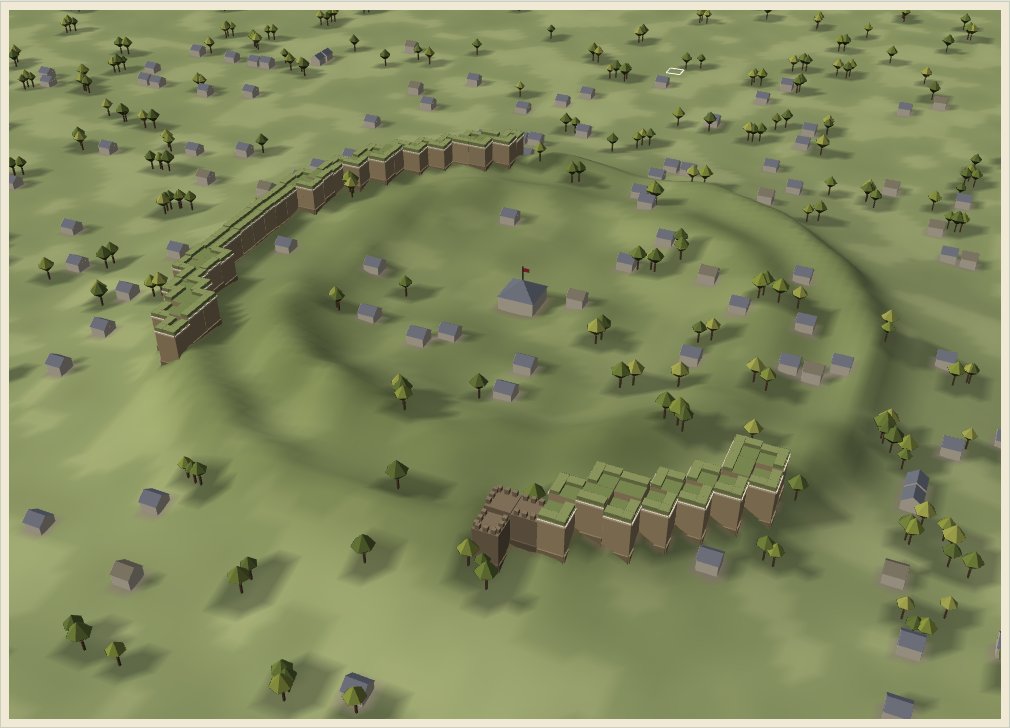
Time and erosion. Ditches silt up, ruins crumble into mounds, and a long-lived town rises on its own hill.
The besiegers are no mindless horde. They read your design, pick its weakest front and attack it the way Vauban taught.
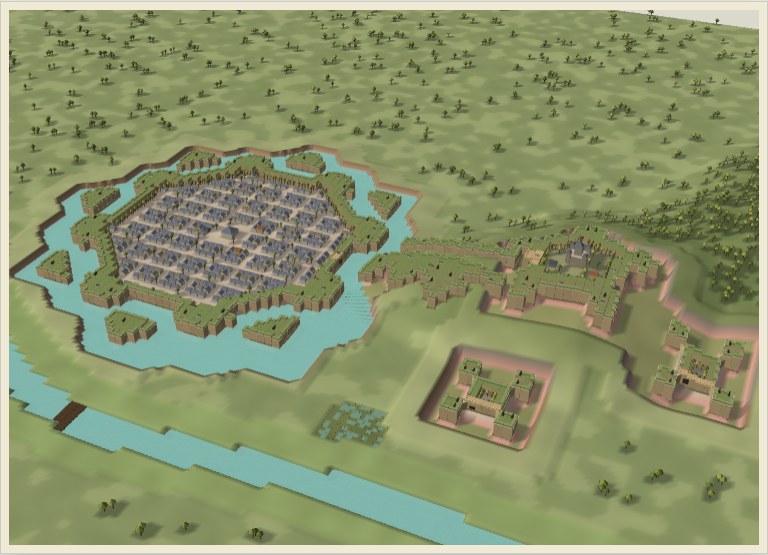
Drag bastions, ravelins and hornworks into place, dig wet or dry ditches, and post cannon and musketeers on the walls.
Saps and parallels creep toward your weakest front. Sortie against the trench head or blow it up with a countermine.
Breaching batteries and ricochet fire pound the walls while miners tunnel beneath. Throw up retrenchments behind a breach.
Columns storm the breach in waves. Hold the citadel until the relief army appears, or watch the place fall.
Guide a town through seventeen centuries, dig up what is left of it, or design a single fortress on the engineer's table.
From the Celtic oppidum to the age of Vauban, a town grows by itself while you fortify it. A siege comes every 10, 25 or 50 years. Lose, and most of your works are razed and buried under a new layer of earth.
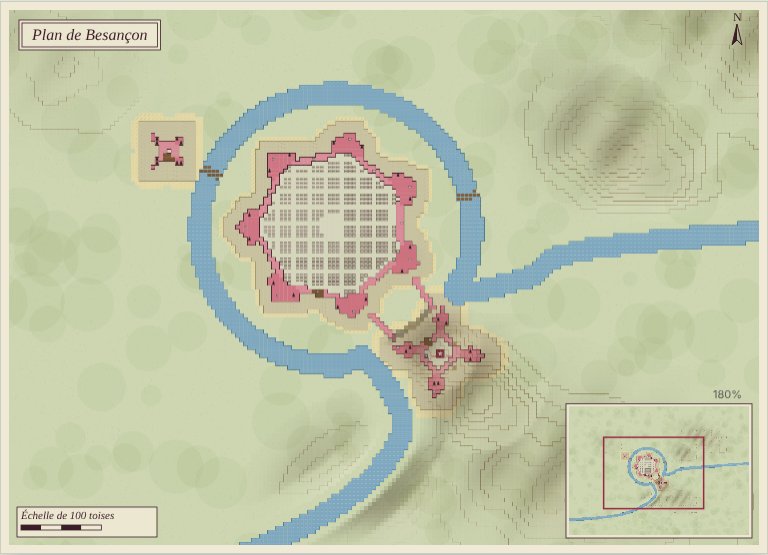
Start from a square, pentagon or hexagon trace, a random landscape or a real city. An engineer's assessment scores your design out of 1,000 and a heatmap shows its weakest front. Run trial sieges, then lay siege for real with up to four armies.
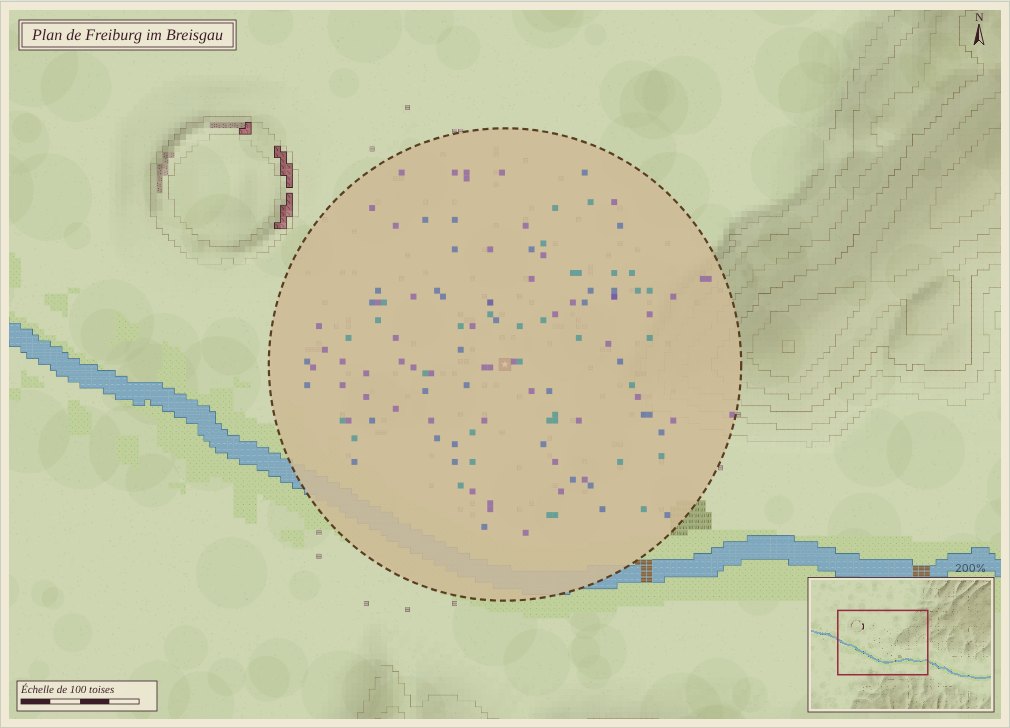
When the chronicle ends, the archaeologists arrive. Slide through time, move an excavation pit across the site, cut a cross-section through the ground and find the oldest wall still standing.
Two historic sites are ready to rebuild and test, their terrain freely modelled after the real places.
The town on the plain, the castle on the Schlossberg, the Black Forest all around. Both must fall before the place is taken, and the castle has only days of food.
The old town in a loop of the Doubs, Vauban's citadel across the neck, and the heights of Chaudanne and Bregille looking down on it.
Rivers, hills, marshes and mountains, surveyed fresh each time. Raise a castle on the heights for the advantage of plunging fire.
On the side
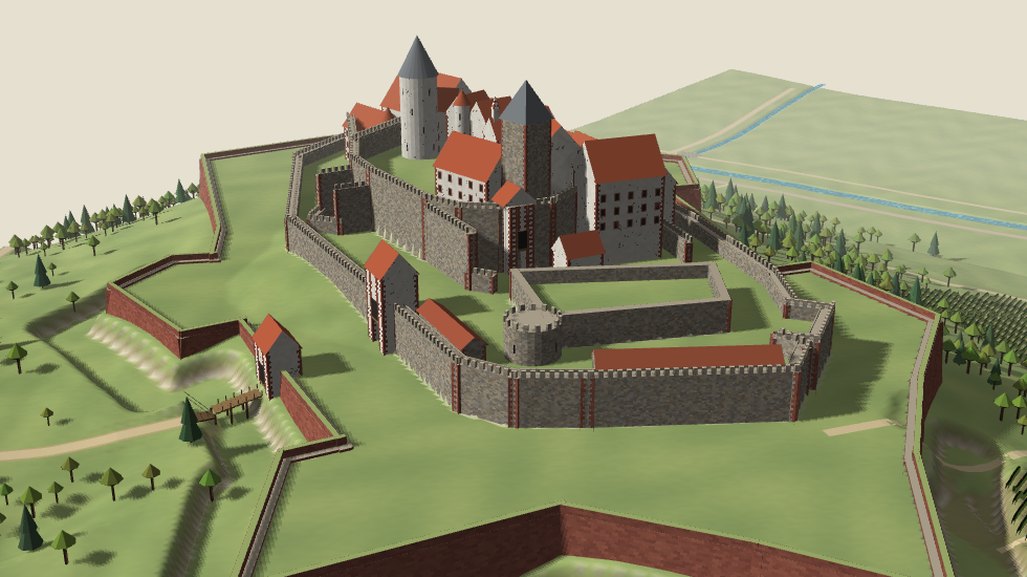
No sieges and no score, just building. Draw walls, towers, halls, ditches and bastioned ramparts on a floor plan, shape the ground, and a sunlit 3D model rises beside it as you draw.
Start from Vauban's works on Freiburg's Schlossberg around 1700, the Hochburg near Emmendingen around 1620, Burg Boxberg after its plan of 1730, a motte and bailey, or the Upper Danube valley with its rock spurs. Then let the centuries turn any of them into a ruin.
Will your walls still be standing?